Leiden, 4 februari 2024
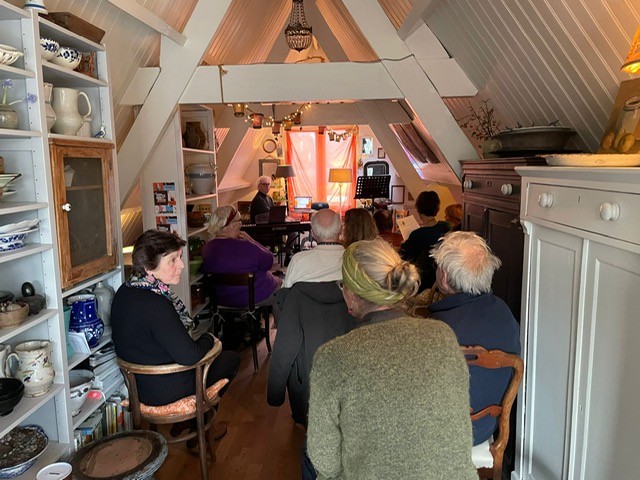
Leusden Maxima’s, 30 juni 2024 vanaf 13.00 uur

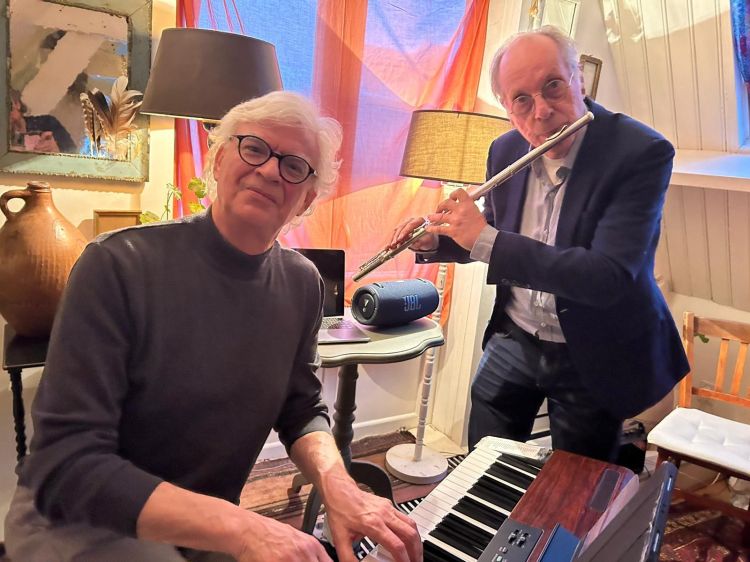
Voor deze gelegenheid spelen we een selectie van bekende stukken van Tom Jobim. Antônio Carlos Brasileiro de Almeida Jobim (Rio de Janeiro, 25 januari 1927 – New York, 8 december 1994), ook bekend als Tom Jobim is een Braziliaans songwriter, componist, arrangeur, zanger en pianist, de belangrijkste exponent van de bossanova. Daarmee werd Jobim begin jaren zestig wereldberoemd, met name door het succes van zijn samenwerking met jazzsaxofonist Stan Getz en zangeres Astrud Gilberto.
“Garota de Ipanema” (“The Girl from Ipanema”) 1960. Het door Gilberto zo ijl gezongen lied werd een wereldhit en groeide uit tot één van de meest gespeelde liedjes aller tijden.
“Insensatez” (“How Insensitive”) 1963 werd een bossa nova-jazzstandaard. Jobim nam het kort voor zijn dood in 1994 op met Sting voor zijn laatste album, Antônio Brasileiro.
“Chega de saudade” (“No More Blues”) 1959. “Chega de Saudade” wordt vaak beschouwd als het eerste bossa nova-nummer dat is opgenomen. Saudade impliceert een intensiteit van oprechte verbondenheid waar hartstochtelijk naar wordt verlangd. Chega betekent in dit geval niet meer, maar genoeg.
“Corcovado” (“Quiet Nights of Quiet Stars) 1960. De Portugese titel verwijst naar de Corcovado-berg in Rio de Janeiro. Tony Bennett nam in 1963 de eerste Engelse cover op.
“You te contar” (“Wave”) 1967. In het Portugees; “Ik ga het je vertellen”. Opgenomen als instrumentaal nummer op zijn gelijknamige album uit 1967. Een Engelse tekst werd later dat jaar door Jobim zelf geschreven.
Só Danço Samba” (“Jazz ‘n’ Samba”) 1962. Het nummer werd voor het eerst uitgevoerd door João Gilberto en Os Cariocas in augustus 1962 in het restaurant Au Bon Gourmet in Copacabana, Rio de Janeiro., tijdens wat Castro “de bossa nova-show noemt die een einde maakt aan alle bossa nova-shows”
“Desafinado” (“Slightly out of Tune”) 1959, “Desafinado” (“Iets vals”) was oorspronkelijk een reactie op critici die beweerden dat bossa nova een nieuw genre was voor zangers die niet kunnen zingen. Het lied werd in 1962 opgenomen door Rita Reys en Pim Jacobs.
Source: Wikipedia
Jobim started to play piano in bars and nightclubs of Rio de Janeiro, and in the first years of the 1950s he worked as an arranger in the Continental Studio, where in April 1953 he had his first composition recorded, when the Brazilian singer Mauricy Moura recorded Jobim’s composition “Incerteza”, with lyrics by Newton Mendonça. Jobim became prominent in Brazil when he teamed up with poet and diplomat Vinicius de Moraes to write the music for the play Orfeu da Conceição (1956).
This collaboration proved successful, and de Moraes went on to pen the lyrics to some of Jobim’s most popular songs.In 1958 the Brazilian singer and guitarist João Gilberto recorded his first album with two of Jobim’s most famous songs, “Desafinado” and “Chega de Saudade”. This album inaugurated the Bossa Nova movement in Brazil. The sophisticated harmonies of his songs caught the attention of jazz musicians in the United States, principally after his first performance at Carnegie Hall, in 1962. A key event in making Jobim’s music known in the English-speaking world was his collaboration with the American jazz saxophonist Stan Getz, the Brazilian singer João Gilberto, and Gilberto’s wife at the time, Astrud Gilberto, which resulted in two albums, Getz/Gilberto (1963) and Getz/Gilberto Vol. 2 (1964).
The release of Getz/Gilberto created a bossa nova craze in the United States and subsequently internationally. Getz had previously recorded Jazz Samba with Charlie Byrd (1962), and Jazz Samba Encore! with Luiz Bonfá (1964). Jobim wrote many of the songs on Getz/Gilberto, which became one of the best-selling jazz albums of all time, and turned Astrud Gilberto, who sang on “Garota de Ipanema” (“The Girl from Ipanema”) and “Corcovado” (“Quiet Nights of Quiet Stars”), into an international sensation. Among his later hits is “Águas de Março” (“Waters of March”, 1972), for which he wrote both the Portuguese and English lyrics, and which was then translated into French by Georges Moustaki (as “Les Eaux de Mars”, 1973).
Jobim is widely regarded as one of the most important songwriters of the 20th century. Many of his songs are jazz standards. American jazz singers Ella Fitzgerald and Frank Sinatra prominently featured Jobim’s songs on their albums Ella Abraça Jobim (1981) and Francis Albert Sinatra & Antônio Carlos Jobim (1967), respectively. The 1996 CD Wave: The Antonio Carlos Jobim Songbook included performances of Jobim tunes by Oscar Peterson, Herbie Hancock, Chick Corea and Toots Thielemans.
 The Roel Book